When someone breaks their thigh bone, also known as the femur, it’s more than just a typical fracture; it’s a serious injury that requires prompt and effective treatment. One of the most reliable solutions doctors use today is called a femur interlocking nail. While the name may sound a bit technical or intimidating, the concept is relatively easy to understand. This article offers a friendly and easy-to-follow explanation for patients and their families.
Understanding the Femur
The femur is the strongest and longest bone in the human body. It runs from your hip to your knee and supports most of your body weight during walking, standing, or running. Because of its strength, it takes a significant force, like a car accident or a hard fall, to break it. But once it’s broken, it can be very painful and needs proper alignment and stabilization to heal correctly.
What Is a Femur Interlocking Nail?
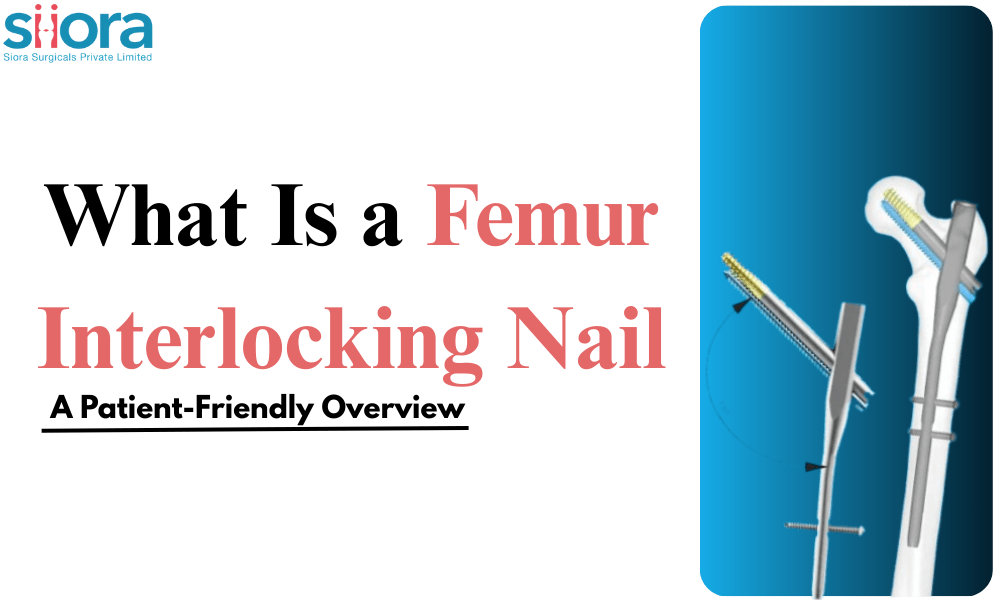
A femur interlocking nail is a long metal rod, usually made of titanium or stainless steel, that surgeons insert inside the center of the femur bone. It runs through the bone’s canal and holds the two broken ends together. The nail is “interlocked” with screws on both ends to keep it from rotating or shifting out of place.
This type of treatment is known as intramedullary nailing, and it is considered one of the most effective methods for treating femoral shaft fractures (breaks in the middle portion of the femur). The nail acts like an internal splint, allowing the bone to heal in the correct position.
What is the Procedure for Femur Interlocking Nailing?
The procedure to insert a femur interlocking nail is done in an operating room under anesthesia. Here’s a simplified breakdown of the steps:
- Incision and Access: A small incision is made near the hip or knee (depending on the technique used) to access the broken bone.
- Reaming (if required): A special tool may be used to widen the canal inside the femur slightly to fit the nail.
- Nail Insertion: The metal rod is carefully inserted through the bone canal, aligning the broken ends of the femur.
- Locking Screws: Screws are placed through small holes at both ends of the nail to “lock” it in place.
- Closure: The incision is closed with stitches, and a bandage is applied.
The entire surgery usually takes about 1 to 2 hours.
Recovery After Surgery
Recovery from femur interlocking nailing varies based on factors like age, health, and how severe the fracture was. Most patients can start physical therapy within a few days after surgery. In fact, early movement is encouraged to reduce complications and improve healing.
Patients typically walk with the help of crutches or a walker for the first few weeks. Full weight-bearing may be allowed gradually, based on how the bone is healing. Most people can return to their normal daily activities within 3 to 6 months, though high-impact activities may take longer.
Benefits of Femur Interlocking Nails
- Strong support: It provides rigid fixation, which is essential for proper bone healing.
- Smaller incisions: Compared to traditional open surgeries, this technique involves smaller cuts and less tissue damage.
- Faster recovery: Patients often regain mobility faster compared to other methods.
- Lower infection risk: Being placed inside the bone reduces the risk of wound infections.
Are There Any Risks?
Risks are involved with all surgical procedures; only the severity varies. These may include infection, blood clots, or problems with screw placement. Rarely, the nail may break or the bone may fail to heal correctly, requiring revision surgery. However, with proper care and follow-up, most patients recover well.
Final Thoughts
A femur interlocking nail may sound complex, but it’s a smart, well-proven solution for fixing broken thigh bones. It helps people get back on their feet faster and with fewer complications. If you or someone you care about is facing this surgery, know that it’s a common and trusted method used by orthopedic surgeons around the world.
Understanding the procedure in simple terms can help ease fears and prepare for a smoother recovery journey. Always talk to your doctor for personalized advice, as they’re your best resource for healing and recovery.If you’re looking to partner with reliable orthopaedic companies in Belarus, connect with Siora Surgicals Pvt. Ltd., a trusted name in the global orthopedic manufacturing industry.
 Site Title