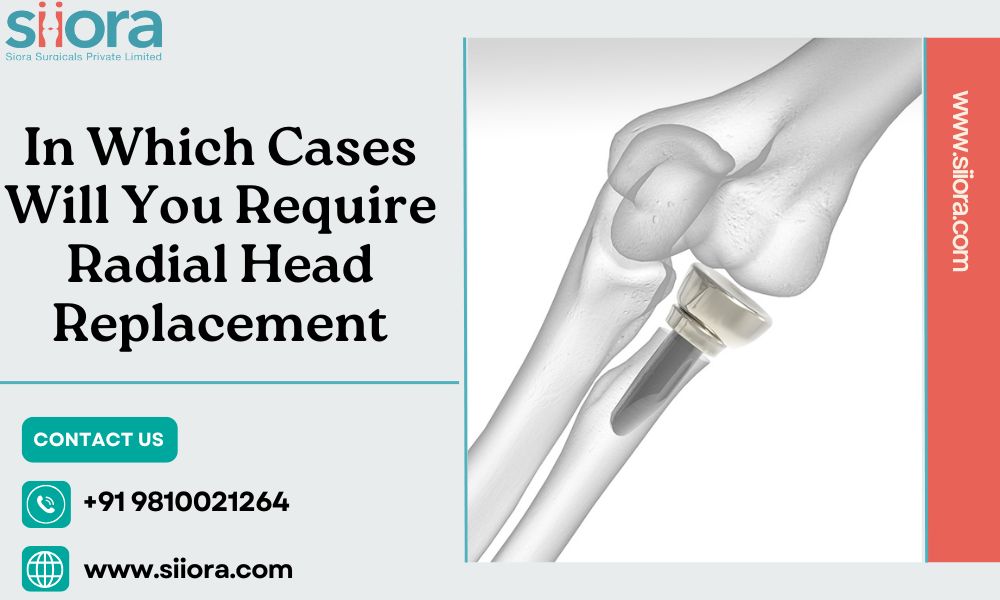
Elbow injuries might not sound like a big deal until you’ve lived through one. If you’ve ever fallen awkwardly on an outstretched arm or been in an accident that hurt your elbow, you know how much it affects the movement of your whole arm. One of the more complex injuries you might face is damage to the radial head, a small but crucial part of your elbow. In some situations, the damage can be so severe that the best solution is a radial head replacement.
Let us have a quick look.
What is the Radial Head?
Before diving into when you’d need a replacement, it helps to know what we’re talking about. The radial head is the top part of the radius—the bone on the thumb side of your forearm—that meets the elbow. It plays a key role in letting you rotate your forearm (think turning a doorknob or flipping your hand palm up), and it helps stabilize the elbow during movement and weight-bearing.
When Things Could Go Wrong?
Injuries to the radial head usually happen from trauma, most commonly a fall where you land on your hand with your arm outstretched. That pressure travels up the arm and hits the radial head hard, sometimes hard enough to fracture it.
Now, not all radial head fractures require surgery. In many cases, especially if the bone isn’t displaced, rest, a sling, and physical therapy do the trick. But in more severe cases, when the bone is shattered or when the fracture affects elbow stability, doctors might recommend a radial head replacement.
When is Radial Head Replacement the Best Option?
Here are the key scenarios where radial head replacement is typically considered:
Comminuted Fractures
This is a fancy way of saying the bone is shattered into several pieces. When the radial head breaks into tiny fragments that can’t be put back together with screws or plates, replacing it becomes a more effective solution.
Loss of Elbow Stability
Your elbow is a pretty stable joint, but when the radial head is badly injured, the entire structure can become unstable. If repairing the bone won’t restore that stability, a replacement can help keep the joint secure and functional.
Failed Previous Surgery
Sometimes, a previous surgery, like an attempt to fix the fracture with screws or plates, doesn’t hold up. If the pain persists or if the bone doesn’t heal correctly, a replacement might be the next step.
Elbow Dislocation with Fracture
In some injuries, the elbow pops out of place, and the radial head gets fractured at the same time. These complex injuries often call for a replacement to ensure the joint heals properly and regains full motion.
What Happens During Surgery?
Radial head replacement surgery involves removing the damaged head of the radius and replacing it with a metal implant that mimics the shape and function of the natural bone. The goal is to restore stability and movement, reduce pain, and get you back to your daily life.
Recovery and Life After Replacement
Recovery varies, but physical therapy is usually a must. Most people regain good function and range of motion over time. The key is sticking with your rehab program and keeping up with follow-ups to make sure everything’s healing right.
Final Thoughts
Radial head replacement isn’t the first line of treatment for elbow injuries, but it’s an essential option when other methods like placing orthopedic plates and screws just don’t work. If you’re facing one of the scenarios above, don’t panic. With modern surgical techniques and rehab, most people return to an active, pain-free lifestyle.
 Site Title